






 今日熱搜
今日熱搜




By Luigi Gambardella
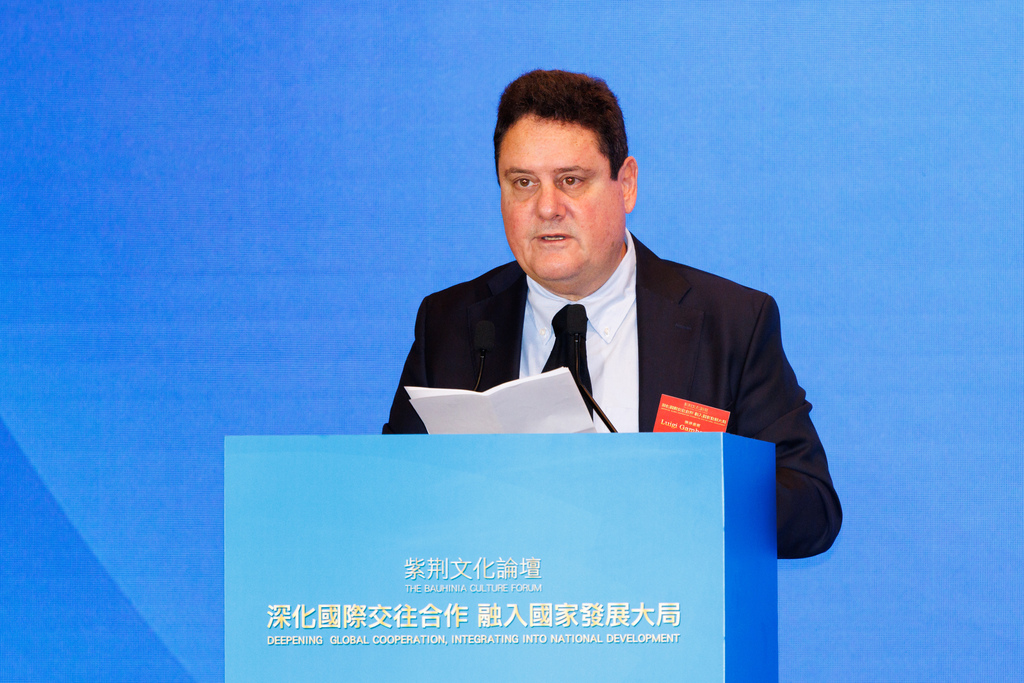
Distinguished Chief Executive John Lee, esteemed government officials, business and academic leaders, ladies and gentlemen,
It is a great honour to address this distinguished audience at the Bauhinia Culture Forum — an event that has rapidly become one of Asia’s most respected platforms for dialogue, reflection, and cooperation between China and the world.
I wish to express my sincere gratitude to Bauhinia Magazine for this invitation and for its remarkable contribution in fostering understanding and trust across cultures.
Hong Kong: where global and national meet
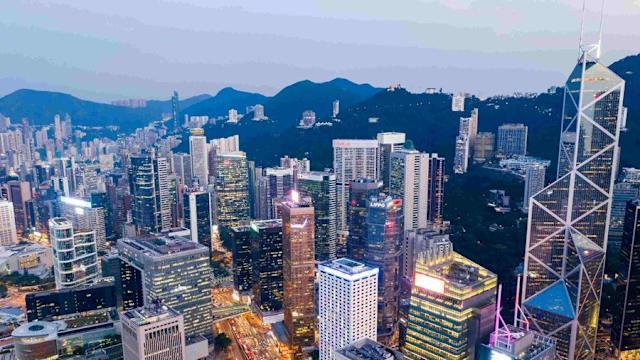
Hong Kong has always been more than a city — it is an idea, a bridge between worlds.It combines the openness of global markets with the depth of Chinese culture, the rule of law with the spirit of innovation. Its true strength lies not in its skyline, but in its philosophy: the belief that integration does not mean assimilation, and that connectivity is the foundation of prosperity.
Having worked with Chinese partners for more than a decade, I have seen first-hand how cooperation grounded in trust can transform bold visions into real achievements.
This spirit — pragmatic, open, and forward-looking — is exactly what the world needs today.
At a time when global dynamics are being redefined by technology, geopolitics, and the race for innovation, Hong Kong’s dual identity is not a challenge — it is a unique competitive advantage.
It stands as both a mirror of China’s progress and a window to the world, projecting openness, diversity, and reliability, while remaining deeply aligned with national strategies such as the Greater Bay Area and the Belt and Road Initiative.
Innovation as the new language of cooperation
If the 20th century was defined by trade and finance, the 21st will be defined by innovation and intelligence.
And Hong Kong stands at the very centre of this transformation.
In fintech, Hong Kong is already a world leader. Its institutions, legal certainty, and international reputation give it the potential to become Asia’s capital of digital finance. Here, the next generation of global standards — from cross-border payments to green digital assets — can be designed and tested.
In artificial intelligence, Hong Kong can emerge as Asia’s trusted voice for ethical and human-centric AI.
With its world-class universities and access to both global and mainland innovation ecosystems, Hong Kong could host the first Asia–Europe Centre for Responsible AI Governance, bridging two continents around shared values.
In urban innovation, as Shenzhen builds the factories of the future and Guangzhou drives industrial intelligence, Hong Kong can design the urban brain of the Greater Bay Area — the digital nervous system connecting mobility, energy, and services to enhance citizens’ daily lives.
Innovation, in short, is no longer a sector; it is the universal language of cooperation.
The Greater Bay Area: an innovation corridor for the world
The Guangdong–Hong Kong–Macao Greater Bay Area is one of the most ambitious development projects in modern history — a vibrant innovation corridor of over 86 million people and a GDP exceeding two trillion US dollars.
It is not just China’s Silicon Valley; it is the world’s next innovation powerhouse.
Hong Kong’s role within the GBA is that of a super-connector — linking global capital, governance standards, and research networks with the entrepreneurial vitality of the mainland.
In fintech, Hong Kong provides credibility; Shenzhen provides creativity.
In AI, Hong Kong brings international partnerships; the mainland brings industrial scale.
In green finance, Hong Kong channels global capital to fund low-carbon projects supporting China’s carbon-neutral goals.
This synergy is not theoretical — it is already unfolding, turning regional integration into global advantage.
Turning cooperation into action
Global cooperation cannot remain an aspiration; it must translate into measurable progress.
I see three key priorities for Hong Kong in this new phase:
1.Talent as the cornerstone
Ideas travel with people, not with papers.
Hong Kong must strengthen cross-border talent mobility within the GBA, establish joint innovation labs with leading universities, and attract global researchers and entrepreneurs to work on common challenges — from AI ethics to green transformation.
2.Infrastructure as the foundation of trust
Connectivity today means secure data flows, high-capacity 5G, and quantum-safe communication.
If Hong Kong leads in these domains, it will not just connect economies — it will connect values and ensure that innovation is both open and trusted.
3.Openness as the essence of credibility
In an age when globalization is questioned, Hong Kong’s greatest strength is its reliability.
By upholding transparency, fair competition, and world-class dispute resolution, it remains one of the few global hubs where business meets trust, and innovation meets law.
Europe and China: a partnership for a shared future
As a European deeply engaged in China’s digital transformation, I am convinced that the next phase of globalization must be built on cooperation between Europe and China.
Our economies share a common responsibility: to ensure that technology serves humanity, not the other way around.
Hong Kong, standing between these two worlds, can become the gateway of trusted digital and green collaboration connecting East and West.
Conclusion: Hong Kong and the new spirit of globalization
Ladies and gentlemen, the challenges of our century — climate change, AI disruption, inequality, and geopolitical fragmentation — cannot be solved in isolation.
They demand a new spirit of globalization: not based on rivalry, but on complementarity; not on division, but on shared innovation.
Hong Kong can be the place where this new vision takes form — a global connector with Chinese roots and universal reach.
As President Xi Jinping wisely said,“The ocean is vast because it admits all rivers.”
Hong Kong, standing at the confluence of China and the world, must continue to be that vast ocean — open, inclusive, and resilient.
From Victoria Harbour to the Pearl River Delta, let the light of cooperation never dim.
If we keep this spirit alive, Hong Kong will not only integrate into national development — it will inspire the world toward a more innovative, sustainable, and united future.Thank you.
(The author is President of ChinaEU.The views do not necessarily reflect those of Bauhinia Magazine.)


 查看更多
查看更多