






 今日熱搜
今日熱搜




By Koh King Kee
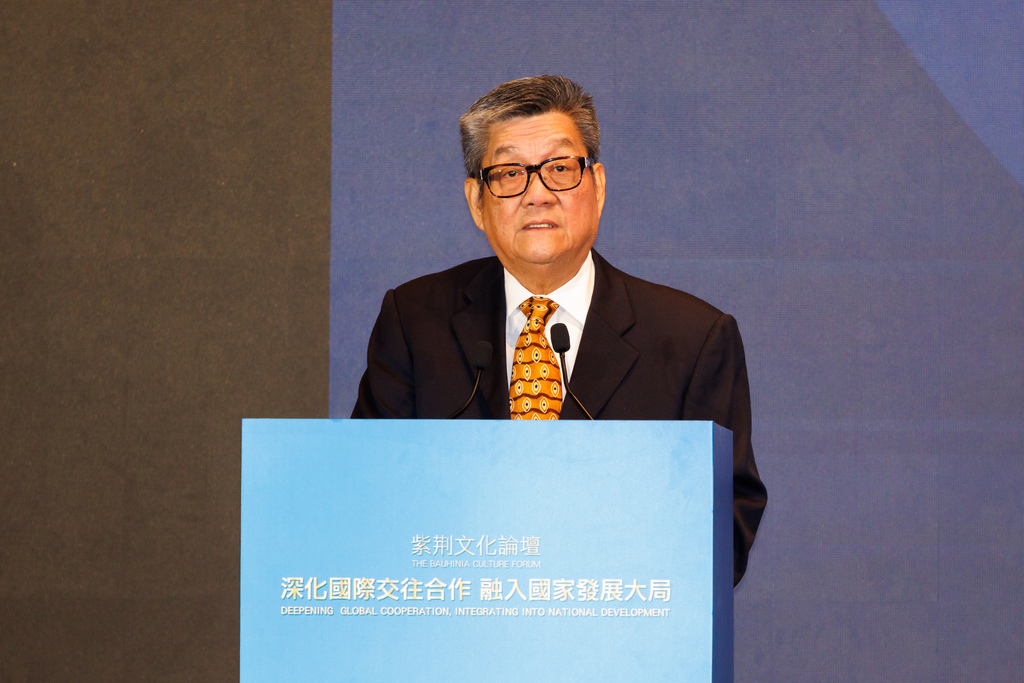
The Honourable Mr. John Lee, Chief Executive of the Hong Kong Special Administrative Region,
Distinguished guests, ladies and gentlemen
A very good morning to everyone.
First of all, I would like to thank Bauhinia Cultural Group for the kind invitation to speak at this year’s Bauhinia Culture Forum. It is a real pleasure, and a great honour for me to be here among
distinguished scholars and friends, who share a deep interest in the story of Hong Kong and itsevolving role in shaping the future of our region.
The theme of my speech is “Hong Kong: A Strategic Connector Bridging China, ASEAN, and the Global Economy”.
Now, before I begin my speech, I would like to share with you a short story about Hong Kong.
In the summer of 1975, while swimming in the Zhongnanhai swimming pool, Chairman Mao Zedong summoned China’s ambassador to the United Kingdom, Geng Biao, to the poolside and said to him:“The southern gate has been opened; now we must push open the northwestern gate.”
By the "southern gate," Chairman Mao was referring to Hong Kong. And by the "northwestern gate," he meant Pakistan.
Aa master strategist, Chairman Mao is fully aware that Hong Kong, as the southern gate, is China’s vital window to the world, even under the British rule. And Hong Kong would always be China’s important link to the outside world — a bridge for trade, for ideas, and for understanding.
That southern gate, ladies and gentlemen, has never closed.
For more than a century, Hong Kong has stood at the crossroads of East and West — a meeting point where Chinese tradition blends with international modernity, and where people, capital, and ideas move freely.
When ASEAN and Hong Kong signed their Free Trade and Investment Agreements in 2018, it reaffirmed Hong Kong’s continuing role as a connector between China and the region. By 2024, ASEAN had become Hong Kong’s second-largest trading partner, a clear evidence that this roleis not diminishing, but deepening.
When China began its reform and opening-up in 1978, Hong Kong became the entry point for global capital, management expertise, and innovation. It helped transform the Pearl River Delta into one of the world’s most vibrant economic regions.
Today, Hong Kong’s role has evolved, from being simply a gateway for goods and finance to becoming a strategic connector that links China’s national development with regional growth.
As part of the Greater Bay Area, Hong Kong connects the global financial system with the innovation and manufacturing strength of Shenzhen and Guangzhou. And as a trusted partner of ASEAN, it bridges China’s domestic market with one of the world’s most dynamic regions -ASEAN , which is home to 680 million people and a combined GDP of about 3.6 trillion USD.
Ladies and gentlemen,
Since 2009, China has been ASEAN’s largest trading partner for 16 consecutive years, and since 2020, ASEAN has been China’s largest trading partner for five consecutive years. In 2024, bilateral trade between China and ASEAN reached nearly USD 970 billion, underscoring theirdeepening and mutually beneficial economic interdependence.
The Guangdong–Hong Kong–Macao Greater Bay Area has a population of around 86–87 million and a combined GDP of about USD 2 trillion, with each city playing a distinct and complementary role. With its strategic location, Hong Kong remains the financial and international business hub while Shenzhen is the innovation and high-tech powerhouse and Guangzhou is a leading base for manufacturing,logistics, and trade flows.
I would also like to emphasize that our cooperation goes far beyond trade. It now extends into the digital economy, green energy, infrastructure, and finance — areas that will shape the next phase of regional integration.
China’s Belt and Road Initiative and ASEAN’s Master Plan on Connectivity share a common vision — promoting prosperity through connectivity and inclusiveness.
In this landscape, Hong Kong plays a unique enabling role. It provides the capital, expertise, and institutional confidence that make regional cooperation possible.
As of around 2020-2022, about 70-75% of foreign direct investment into mainland China is recorded as coming from Hong Kong. Meanwhile, an increasing number of Chinese enterprises — particularly fintech and service-oriented firms — are using Hong Kong as a base or platform for investment into ASEAN, leveraging its legal, financial, and cross-border facilitation services.”
Hong Kong is currently the world’s largest offshore renminbi centre, handling about three-quarters of all global RMB transactions . It reflects Hong Kong’s a crucial role as ASEAN economies increasingly adopt the renminbi for trade and settlement.
Meanwhile, Hong Kong is leading Asia’s transition to green and sustainable finance by helping to fund infrastructure and climate projects across the Belt and Road partner countries and throughout ASEANAnd underpinning all these is Hong Kong’s rule of law. Its bilingual legal framework and trusted dispute-resolution system give confidence to investors and partners alike. In an uncertain world, such confidence is not just a legal asset, it is a strategic advantage.
Within the Greater Bay Area which has a population of 86 million and a GDP of about 2 trillion US dollars — each city plays a distinct role. Hong Kong is the financial engine, Shenzhen leads innovation and Guangzhou anchors manufacturing and logistics.
For ASEAN, this integration creates a new gateway into China’s innovation economy. Through Hong Kong, ASEAN entrepreneurs can access Chinese capital, technology, and consumers. Likewise, through Hong Kong, Chinese enterprises can expand confidently into ASEAN markets.
In that sense, Hong Kong is not just connecting economies. It is helping to weave together the fabric of Asia’s growth story, a story of partnership, adaptability, and shared progress.
Yet Hong Kong’s contribution extends well beyond commerce. It is also a bridge of culture — a meeting place of minds.
Each year, thousands of students from ASEAN study in Hong Kong’s universities. Artists, scholars, andentrepreneurs gather here for exhibitions, exchanges, and forums like this one. These interactions foster understanding and trust, the kind that no trade agreement or investment treaty can replicate.
Hong Kong’s open, bilingual, and outward-looking character enables it to act not only as a connector ofmarkets, but as a connector of people.
Of course, Hong Kong’s journey has not been without challenges. It has faced crises, economic turbulence, and global uncertainty. Yet time and again, it has shown resilience. It is able to adapt, to reinvent, and to emerge stronger while holding fast to the rule of law, the free flow of capital, and the creativity of its people. And that resilience is what keeps Hong Kong relevant — and what makes it a trusted partner for ASEAN and beyond.
Ladies and gentlemen,
Looking ahead, Hong Kong’s role as a strategic connector will deepen in three key ways.
First, Hong Kong will continue to lead in green finance, fintech, and renminbi internationalization, thus supporting inclusive and sustainable growth across Asia.
Second, through the Greater Bay Area and the Belt and Road Initiative , Hong Kong will link China’s domestic transformation with ASEAN’s dynamism, creating new engines of shared development.
And third, through education, tourism, and cultural collaboration, Hong Kong will continue to strengthen the human bonds that sustain long-term trust.
Together, these connections will shape a more integrated and resilient Asia — one that values cooperation and shared progress over zero-sum rivalry.
Ladies and gentlemen,
We now live in an age of uncertainty. Fragmentation and mistrust often threaten to divide the global economy. With US technology containment of China, bifurcation of the technology world may happen. Yet amid these challenges, Hong Kong stands as a symbol of connection. It is a city that links systems, economies, and civilizations.
From a historic gateway, Hong Kong has now evolved into a strategic connector. It has become an indispensable bridge in the architecture of regional and global cooperation.
Half a century after Chairman Mao spoke of the “southern gate,” that gate is still open — and I believe it’s wider than ever.
Thank you.
(The author is President of Centre for New Inclusive Asia.The views do not necessarily reflect those of Bauhinia Magazine.)



 查看更多
查看更多